
What are the Global Implications for CFI
 What are the Global Implications for CFI?
Government focused on growing economies focus on creating jobs. Small business and entrepreneurs are the driving force behind every successful economy across the globe. Cultures and governments that embrace and celebrate the entrepreneur are more likely to succeed in both the short and long term.
Although crowdfund investing is not an economic cure-all, it can be an important part of the solution. It allows significant numbers of citizens to make modest investments in high-growth and/or community businesses. And it can benefit your country for the following reasons:
1. Ideas Follow the Money
Fostering an ecosystem that encourages entrepreneurship and innovation requires capital. If the financial markets or regulations in a particular country are such that capital isn’t flowing, businesses can’t get the money they need. Entrepreneurs who are passionate enough about their ideas will go where the money is available to fund them. This is why many Canadian entrepreneurs head to the United States: because capital is more readily available to fund them there. Countries that wait to update their securities laws will create “brain drain” as skilled entrepreneurs head to other countries where they can fund and launch their businesses. An idea that is successfully funded in one country generally stays there and rarely returns back to the entrepreneur’s country of origin.
2. Ideas Turn into Job-Producing Businesses
Ideas launch businesses. Businesses require people to grow. Good ideas can turn into great job-creating businesses. According to the Small Business Administration, all net new jobs in the United States in the past 30 years were created by small businesses. Big businesses employ thousands of people, but tens of thousands of small businesses create a much larger number of jobs. Crowdfund investing allows a community to fund local businesses and, in doing so, to create its own jobs.
3. Job-Producing Businesses Are Tax Revenue Generators
Businesses pay salaries to employees. Employees pay payroll taxes to the government. U.S. payroll taxes fund both Social Security and Medicare. The more jobs there are, the greater the tax receipts. The greater the tax receipts, the more money the government has to cover these expenses and pay for the future health of its citizens. In addition profitable businesses pay taxes on their profits to help support the infrastructure (roads, electricity, water, and so on) without which a business could not operate. Crowdfund investing will encourage more profit-seeking businesses that will generate more tax receipts for governments.
4. Economic Stimulus Is a Byproduct of Entrepreneurship and Innovation
Entrepreneurship and innovation are about creating and sustaining ideas — ideas that provide solutions to problems and are purchased by consumers domestically and globally. The cash that consumers pay to a business is used to purchase goods to make the product or service, to hire employees, and to pay for things like lawyers, marketing services, and rent. This flow of capital is a boost to an economy. The more a government can do to encourage entrepreneurship and innovation, the more capital will flow, and the better off its economy will be.
5. Local Investing Keeps Money in the Community and Country
The vast majority of capital local businesses spends stays in the local communities where other shops reside. That money is spent on chamber of commerce dues, tax attorney services, lawyers, general contractors, landlords, business services (phone, Internet, trash pickup), local advertising, and so on. Businesses also employ people who make a living from a business’s revenue and, in turn, support the local communities further via grocery stores, gas stations, restaurants, and other everyday expenses. Many state and federal governments understand this multiplier and try to make their regions as attractive as possible for entrepreneurs to start businesses.
6. Crowdfund Investing Leads to a Larger Middle Class and Greater Stability
Having a “barbell” economy with a large underclass, a large wealthy class, and very little in the middle is unhealthy. A barbell economy doesn’t offer people in the underclass models for how to improve their circumstances or create better lives for their families. Also large unemployed population is a dangerous situation for political stability. When you have over 15 percent unemployment in a country, and when that unemployment is particularly pronounced in citizens under 30 (who are educated and frustrated because they are unable to work), you have a recipe for unrest. Crowdfund investing provides communities with a way to build businesses that add value and create jobs. Countries must create ways to grow the size of their middle class.
7. The Number-One Source of Net New Jobs Is Small Businesses
Many economic studies show that the number-one source of net new jobs is small businesses. To create new jobs in your country, you need to help small businesses to start and grow. With the legalization of equity-based crowdfund investing, small businesses have a new spigot of capital that they can use to grow their businesses and create jobs. People working in small businesses are already oftentimes wearing multiple hats (sales manager, sales person, marketing manager, social media marketer, advertising manager, and so on). When small businesses grow, they have no choice but to hire more people.
8. The Web Can Get Capital Flowing
Before the Internet, banks or other third parties were the only way for individuals to pool their resources and then provide them (via the banks and their lending guidelines) to other individuals to build businesses. Now, individuals can use the web to connect people who have capital to people and businesses that need capital. Other than face-to-face communication, there is no more transparent communication channel than the Internet. The web supports many-to-many communication that enables people to communicate their needs and allows other people to evaluate those needs and determine whether to provide the requested resources.
9. People Want to Support Their Country
Don’t underestimate the power of national pride. People want to support the country and culture they know. People want to invest in people, products, and services they know. In a lot of countries it’s hard for people to invest in businesses that their fellow countrymen are starting and growing. Rather they have to send capital to other countries where it is easier to find a return on their investment. National pride is one reason, but savvy and successful businessmen and women also understand that the better off their country’s economy is, the better off their own businesses will be. This is one reasons we believe crowdfund investing will increase the flow of diaspora money. Today, literally billions of diaspora remittances are already flowing back. With crowdfund investing, countries create the opportunity for additional capital flows to not only support basic needs but also to make real investments in high value and potentially high-growth businesses in the countries to which people feel deeply connected.
10. You Don’t Want to Be Left Behind!
Crowdfund investing is the dawn of Web 3.0, where the social web meets capital formation. It’s a true disruption of the private capital markets. For the first time, both existing Main Street businesses and startup businesses can seek capital via the same channel and can leverage the power of their communities. More and more countries are exploring this opportunity and working to legalize versions of crowdfund investing that are appropriate for their culture and capital markets. This is another step in making the world a smaller and more connected place. Don’t be left behind!
Sherwood Neiss is a Principal at Crowdfund Capital Advisors. CCA is a strategy and technology advisory firm that works with Governments and NGO on implementing a CFI infrastructure.


 Brian is the Founder of Crowdwise, LLC, and is an angel investor in 80+ private startups through equity crowdfunding.
 Jenny Kassan has almost three decades of experience as an attorney and advisor for mission-driven enterprises. She has helped her clients raise millions of dollars from values-aligned investors and raised over $3 million for her own businesses.
 Over 35 years of experience in Information Technology with the majority of time being spent in the Financial Services industry. Possesses detailed knowledge of all aspects of the online capital formation/crowdfunding, international brokerage, hedge fund and asset management businesses. Able to recruit and motivate strong teams capable of solving mission critical business problems.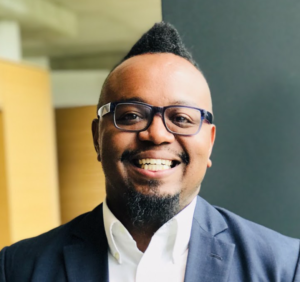
 Devin is a journalist, author and educator. He calls himself a champion of social good. As a new-media journalist and founder of the Your Mark on the World Center, Devin has established himself as a champion of social good. As a Forbes contributor, with over 400 bylines and over
 Vincent Molinari is the CEO of Templum Markets, (FINRA Registered Broker Dealer and ATS) and Co-Founder of it’s parent company, Templum, Inc. He is also a Co-Founder and Co-Chair of the Blockchain Commission for Sustainable Development and is a Co-Founder and Co-Chair of Blockchain for Impact.
 Blaine McLaughlin is the Chief Product Officer of VIA Folio, an innovative IPO, private and alternative investment platform that makes it easy for online platforms, issuers, investors, brokers and advisors to engage with IPOs, private and alternative debt and equity offerings. Part of Folio Investments, Inc., VIA Folio supports issuance, custody, servicing and secondary transactions in public and private equity and debt investments, and other listed and unlisted securities. McLaughlin joined the company in 2007, and has led retail customer acquisition and management, partnerships, portfolio acquisition, introducing broker services, and other business development activities.
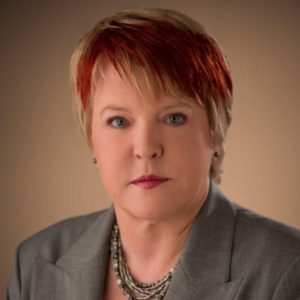 Sara Hanks, Founder and CEO of CrowdCheck, is an attorney with over 30 years of experience in the corporate and securities field. CrowdCheck provides due diligence, disclosure and compliance services for online capital formation. Its services help entrepreneurs and project sponsors through the disclosure and due diligence process, give investors the information they need to make an informed investment decision and avoid fraud and help intermediaries avoid liability.
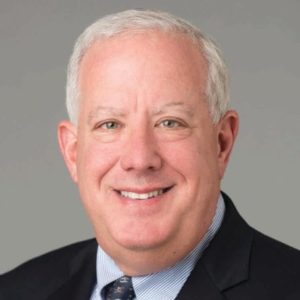 David N. Feldman concentrates his practice on corporate and securities law and mergers and acquisitions, as well as general representation of public and private companies, entrepreneurs, investors, and private equity and venture capital firms. Mr. Feldman also advises emerging growth companies with regard to alternatives to traditional financing through initial public offerings. He is also considered an authority on public offerings through the recently implemented SEC Regulation A+. Mr. Feldman also represents investors, social media sites, public and private issuers and applicants for grow and dispensary licenses in the emerging cannabis industry.
 Jason Paltrowitz is Executive Vice President and Global Head of Business Development at OTC Markets Group, where he is responsible for all international and domestic corporate services new business and relationship management. Prior to joining OTC Markets in October 2013, Mr. Paltrowitz was Managing Director and Segment Head at JP Morgan Chase and was responsible for the custody, clearing and collateral management business in the Corporate and Investment Bank division. Mr. Paltrowitz started his career at BNY Mellon serving in multiple senior management positions, most notably as Head of M&A for the Financial Markets and Treasury Services Sector and 11 years in the Depositary Receipt Division as the Head of the Global Capital Markets Group. Mr. Paltrowitz also served as a member of the Board of Directors at OTC Markets Group from 2008 – 2011.
 Patrick Tracey is Director of Business Development for Morrow Sodali. In this role, Pat brings expertise in a number of areas including Proxy Solicitation – Activism – Corporate Governance Advisory – IPO Prep – Demutualization (Insurance Companies, Community Banks and Credit Union) – Stock Surveillance for Public, Private and Mutual companies.
 Xiaocheh Zhang currently serves on the CfPA Board of Directors. He is also a co-founder of the Crowdfunding China Society (CFCS). As a crowdfunding thought leader, he has advised many organizations in applying alternative finance and result-based approach in transforming their business models. He has provided services to World Bank, United Nations, TUEV SUED, Virginia Tech, Peking University and some other organizations in the past 15 years. Xiaochen has rich experience in both public and private sector in America, Africa, Asia, Latin America and Europe to incubate and scale up innovative programs and projects at all levels. He is also a recognized speaker in climate finance, green innovation and crowdfunding. Here are a few examples:
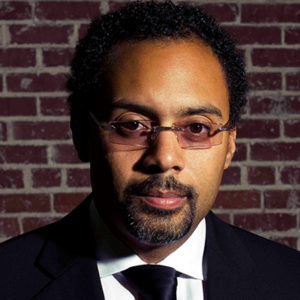 Rodney Sampson is an innovator, serial entrepreneur, angel investor, published author, and consecrated bishop. As an innovator and serial entrepreneur, Sampson co-founded Multicast Media Networks (Streamingfaith.com) in 2000 (acquired in 2010), a live and on-demand streaming platform that laid the foundation for companies like YouTube and Ustream. Not stopping there, Sampson co-founded Intellectual Currency (an integrated marketing, intellectual property, diversity & inclusion and business development advisory firm) in 2002, Intellect Inspire (a digital publishing imprint of Audible) in 2006, and Legacy Opportunity Fund in 2007 with investments in technology, consumer products, energy, cyber-security, publishing and the entrepreneurial ecosystem. He also serves on the advisory boards of Digit, a disruptive financial technology company, Mark Burnett Productions, Springboard Fund and multiple startup and early stage companies throughout the world.
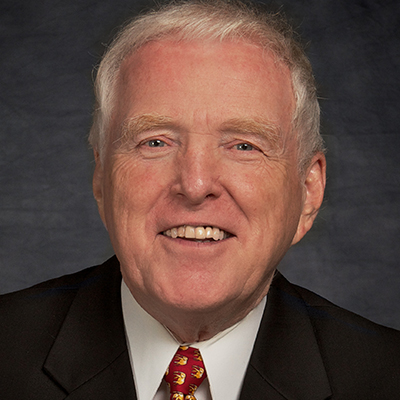 Thell Woods, a former interim president of the CfPA, founded and currently serves as chairman of Crowdfunding Services LLC. The company helps establish “Community Centric Crowdfunding” programs offering both non-profit and securities offerings. Thell serves specifically defined communities throughout Michigan developing the www.C3funding.com website as the base for these programs.
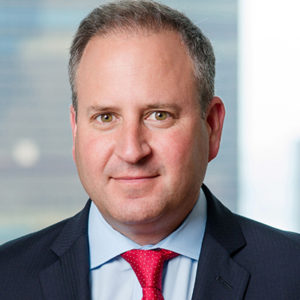 Brian Korn was elected to the Board of Directors (Legal P.O.V.) of the Crowdfunding Professional Association in January 2014. Brian is a corporate and securities attorney at the law firm Manatt, Phelps & Phillips, LLP, and has had multiple appearances on Fox Business Television, Bloomberg, CCTV America and National Public Radio as an expert on the JOBS Act, including its impact on crowdfunding, peer-to-peer lending, IPOs and market trading dynamics. He has been published or quoted in Forbes, CNBC, MSNBC, New York Law Journal, Law360, Philadelphia Inquirer, Pittsburgh Post-Gazette, The Financier Worldwide and The Review of Securities & Commodities Regulation.
 Thomas Lawson is vice president of private issuer services for VIA Folio, Folio’s private capital network. In his role at VIA Folio, he provides legal and regulatory guidance to business development and operations. As part of this work, he supports VIA Folio’s online transactions in unlisted securities. He joined Folio in 2015.
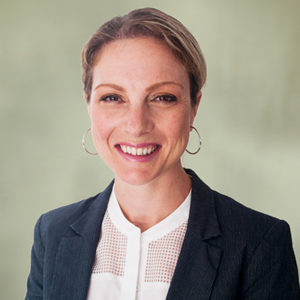 AdaPia D’Errico is the Chief Marketing Officer at Patch of Land, where she heads up marketing, which includes strategy, brand, communications, partnerships and client services. Prior to joining Patch of Land, AdaPia ran a consulting company that developed growth strategies for major brands at Disney and Mattel, as well as technology and new media startups. AdaPia began her career at CIBC and subsequently spent 8 years in banking and investment management with a focus on customer relationship management, investor relations, and corporate communications. AdaPia is a published writer, blogger for The Huffington Post, and is a public presenter on topics including growth strategies, entrepreneurship, crowdfunding and brand development. AdaPia holds a B.B.A from the University of British Columbia and a B.A in International Business Economics from Hogeschool Zeeland, The Netherlands.
 Dara Albright is a recognized authority, thought provoker and frequent speaker on topics relating to market structure, private secondary transactions, next-gen IPOs, P2P, FinTech and crowdfinance. Albright has held a distinguished 23 year career in IPO execution, investment banking, corporate communications, financial marketing as well as institutional and retail sales.
 Jordan Fishfeld is the former CEO and co-founder of PeerRealty (sold), and current Chairman of the Board and co-founder of CFX Markets and OpenFinance Network, secondary market platforms for traditionally crowdfunded and digital assets, respectively. In this role, he focuses his time on strategic planning and general oversight in the new and growing digital marketplace. With over 8 years of compliance, legal, investing, and sales experience in regulated markets, Jordan understands the need for a single coherent voice in the crowdfunding and blockchain industries.
 Dr. Richard Swart is recognized as the global thought leader in the crowdfunding industry. Richard is a founding board member of the Crowdfunding Professional Association (CfPA), the Crowdfunding Intermediary Regulatory Advocates (CIFRA), and an early leader in the field. Richard co-organized the first major national conference on crowdfunding and coordinated several educational events on the JOBS Act throughout the United States for the White House.
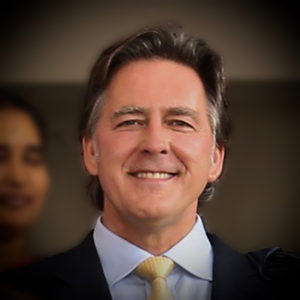 Scott McIntyre. 2024 marked Scott’s 9th term as Chairman of the CfPA’s Board of Directors, having served in leadership since formation in 2012, including four terms as President & Chair.
 Alon is the Managing Partner of Stacked Capital, an early-stage industry agnostic venture capital fund. Previously Alon was the co-founder, Chief Financial Officer, and Chief Technical Officer of crowdfunding platform RocketHub, acquired in 2015. Alon is a founding member of the Forbes Technology Council, and a Strategic Advisor to Zombie Soup (Artificial Intelligence, Virtual Reality, and games); he has twice testified in front of U.S. Congress on equity crowdfunding, co-authored three acclaimed whitepapers on the JOBS Act, and was selected to lead FINRA’s Capital Markets Series on crowdfunding. Alon oversaw RocketHub’s partnerships with the White House, U.S. Department of State, Fulbright Foundation, Cisco, Microsoft, Chrysler, and others. Alon has led large speaking engagements for organizations including American Express, TEDx, Campaign Summit, Re.Comm, and Make Innovation. Alon earned his M.Sc from Columbia University and was a fellow at the Earth Institute’s Advanced Consortium of Cooperation, Conflict, and Complexity; he specialized in genocide prevention and social network theory.