How much do you know about Crowdfunding? This was the context of a survey conducted by Crowdfunding Professional Association in conjunction with Crowdfund Capital Advisors. They asked 442 entrepreneurs, investors and intermediaries about their interest in crowdfunding, and also about themselves. What they discovered was encouraging as to the level of interest and how much capital they wish to invest, but there still is confusion about all the “CF” buzz words and how specifically equity-based crowdfunding platforms will differ from things like the popular platform Kickstarter.
Since the survey was hosted by Crowdfunding Professional Association, many of the responders (68 percent) were already very familiar with crowdfunding. However, when asked to rank their understanding on a scale of 1 to 10 as to the difference between what is allowed under current crowdfunding, and how it differs from what we will have in 2013 under the JOBS Act, 36.64 percent ranked themselves as a 5 or less, showing there is a real opportunity to educate the public. Fortunately, a majority of those sampled self-reported a high level of understanding of the implications of this new law, with a full 20.14 percent ranking themselves as having an understanding of 10.
“The general awareness of investment crowdfunding has increased substantially since April but there is still a meaningful opportunity to help entrepreneurs and investors better understand both the nuances of the JOBS Act and early-stage investing in general,” said Ryan Feit, CEO of SeedInvest, an equity-based platform and a leader within the Crowdfunding Professional Association. “Both of these objectives are critical in order to ensure that the investment crowdfunding industry takes off with the massive potential it possesses.”
Distinguishing between token crowdfunding and equity or debt-based crowdfund investing could pose a challenge for new investors, and it is important that people understand these differences if they are to meet their investment objectives. Token crowdfunding, the current model, only allows crowdfunding campaigns to reward donors with gifts, free
samples of their product , or other perks. In contrast, under the JOBS Act, the crowd will be able to be full-fledged investors with an equity stake in the company and a right to a share of the profits. A third popular kind of crowdfunding is debt-based, which allows investors to provide small loans to entrepreneurs similar to the kind of micro lending we have seen used for international development from people like Dr. Muhammad Yunus’ Grameen Bank.
One issue with debt-based crowdfunding is the loans are often unsecured by collateral, meaning investors take on the same level of risk as they would with equity-based crowdfunding, but the upside potential of a company taking off is removed as investors would only receive their loan repayment plus interest. However, statistics are showing low or no default rates, particularly on debt-based crowdfunding platforms like SoMoLend.
As for concerns within the crowdfunding space, respondents were generally enthusiastic and did not, on average, place one concern over another (on a scale of one to five). The respondents were more concerned about lack of business prowess (3.07), lack of entrepreneurial education (3.07) and fraudsters (3.05), than they were about the investor’s level of sophistication (2.98) or whether they will be overloaded with information (2.84). Interesting enough, ‘investors only’ ranked their concern over fraud a bit lower (3.02) than ‘entrepreneurs only’ (3.11) — surprising many who assumed investors would be markedly more concerned.
However, seeing fraud not at the top of the list is good news for the industry considering that crowdfunding in the UK has over the last two years produced a sterling record when it comes to fraud. Similarly, crowdfunding has been legal in Australia for seven years with no incidence of fraud. One widely reported incident of fraud involving a Massachusetts company was falsely associated with crowdfunding in the U.S. by the North American Securities Administrators Association, a major regulator of the traditional securities market — however they failed to point out that this particular incidence of fraud did not actually involve crowdfunding; it took place in 2010 long before the crowdfunding law was under consideration by Congress, and furthermore, all under the watchful eye of the old (and current) securities regime. The current securities laws, for several reasons, allow more secrecy in small investments (e.g.: they don’t require background checks) and make them harder to do (because of legal/compliance fees) and hence less common.
While we don’t like to harbor on fraud because the markets do operate at 99.9 percent efficiency, the truth is that there has been much more fraud in the traditional regulated market than there has been in crowdfunding. “We believe this is due to the community-based system,” says Sherwood Neiss, co-founder and principal at Crowdfund Capital Advisors. “Committing fraud within the crowdfund investing (CFI) framework is going to be hard to perpetrate. In CFI, all deals will have to flow through SEC-registered portals. These portals will be regulated and the offerings policed by the crowd. If there’s one thing we’ve seen come from social media, is it is nearly impossible to pull the wool over thousands of watchful eyes on the Internet.”
Since the data revealed 41 percent of responders had a desire to help companies get capital where they couldn’t before, 44 percent wanted to be part of something bigger than themselves, and 35 percent wanted to make a difference in the life of an entrepreneur, it seems investors are not afraid to roll up their sleeves and really look into what a company is doing to judge the viability of the investment themselves. The community aspect comes into play within the portals where current and prospective investors will be able to rate and comment on the activities of the various investments and hold management’s feet to the fire if things are being mismanaged. Such open dialog on a medium like the Internet, where thoughts and comments are recorded for history, leads to transparency and accountability.
In the seven years crowdfund investing has been legal in Australia and in the two years it has been legal in the UK, no cases of successful fraud have been discovered. In donation-based crowdfunding in the US, fraud has been caught rapidly, and always before funds are distributed, as social networks uncover the truth. Experience has already shown that potential sponsors are able to collectively crowdsource a startlingly effective due diligence machine far better than the eyes of a single Wall Street analyst. They are able to shed light on every aspect of the business. This is very different from the market of the early 2000′s when people bought and sold derivatives products blindly without looking at the underlying assets or what the original investment actually was. This type of community driven investing means people will have intimate knowledge of the activities of the few crowdfunded ventures in which they are able to participate before they reach a legal cap based on their income and net worth. This is a system by which friends, and friends-of-friends, get together to grow an idea they understand and personally support.
One major industry that will be big in crowdfunding is technology. A full 30 percent of the entrepreneur responders were in the technology sector with 10.3 percent in media and entertainment, 9.87 percent in finance, and 9.44 percent in consumer goods. 19.47 percent were in the catchall “Other” category, which included ideas such as Space and Robotics , Energy, Health, Beauty, Medical Devices and others. Crowdfunding seems to have natural allies among the tech sector innovators of Silicon Valley, as they are constantly starting new ventures and they understand the power of social media. “What they don’t have access to is the capital that only resides within 60 miles of Silicon Valley — which is where CFI steps in. It allows tech companies in Anytown, USA to raise capital for their ideas locally,” says Jason Best, co-founder and principal of Crowdfund Capital Advisors.
Where will the entrepreneurs gravitate to fund their ideas? The largest portion, 34.67 percent of respondents, said they would go to the most visible portal or platform to help raise the most capital, while another 34.34 percent were interested in industry-specific platforms. We surmise the interest in industry-specific platforms is based on a belief those platforms might better target more savvy investors interested in funding innovative technical niche ideas. The thinking driving that statistic might be that industry-specific ideas may not get traction from the average investor looking at returns alone on some other platform with more ‘generic’ offerings, despite the platform’s visibility. “
Since a large portion of the respondents were in technology and a sizable portion were interested in industry specific portals and platforms, it is likely that there will be room for several tech industry crowdfunding platforms to become successful in the new market.
Are these all zero revenue companies? Surprisingly, they are not. The respondents were generally small companies. Of the 122 that responded to the question about 2011 revenues, 81 percent reported under $100K. 15.7 percent reported having 2011 revenues between $500K and $1 Million. 1.65 percent had 2011 revenues between $1 million and $5 million, with another 1.65 percent reporting 2011 revenues of over $5 million. Don’t let their small sizes fool you, these entrepreneurs have big dreams! Although 36 percent of respondents were looking to raise capital for the first time, 35 percent have been part of a startup before, showing they have experience with startups.
While 15.88 percent of respondents had only an idea for a startup, 33.48 percent had a formal business plan, 27.04 percent had a product or prototype, and a full 23.61 percent were already operating and bringing in revenue. Those figures show the error in the notion that anyone and everyone with an idea will be throwing it up on CFI platforms, as the majority of respondents had much more than simply an idea.
36.64 percent of entrepreneurs were looking to raise under $100K in capital from portals to fund their venture. 35.34 percent wanted to raise between $100K to $500K. 16.81 percent wanted to raise between $500K and $1 million, while the remaining 11.21 percent were hoping to raise more than $1 million. With 88.79 percent of the respondents looking to raise amounts under the $1 million dollar threshold set out by the JOBS Act, it is clear that this new asset class will find an under-served market. It wouldn’t make sense for these companies to go though the red tape and regulatory burden of an IPO or formal Reg D to raise such a relatively small sum of capital. An exorbitant percentage of that raised capital would be taken up in attorney and investment bank fees under the traditional IPO process.
These companies aren’t looking for huge amounts of capital, but they do want to grow. 79.39 percent have three or fewer employees, and of that group 44.05 percent are companies made up of only one individual. They want money to expand, 41.24 percent of the companies want to take their employee count to five or more. “Jobs might be the biggest thing to come out of Crowdfund Investing,” says Neiss. “Capital to fund an idea is just one part of the equation. Having the capital you need to build a successful team to help you grow your business to the next level is another. Getting these entrepreneurs the capital they need will allow them to hire the Americans they want to launch great businesses.”
Small businesses find it difficult to get the eyes and ears of professional investors. With the current economy banks are failing to lend and refusing to take a chance on small businesses, to the point where many people have stopped trying. Out of 124 respondents 18.22 percent tried to get a loan from a traditional bank. Compare that figure with the 20.44 percent that approached Angel Investors, 13.78 percent that went to VC’s and 12 percent that went to private equity. To add further credibility as to why the community will be where these entrepreneurs find their funds, 35.56 percent went to friends and family. Clearly, people are eschewing the institutionalized paths to capital and opting for less formal sources of money that may be more interested in the upside potential of their business or idea rather than concerned about collateral.
From the survey we also learned quite a bit about potential Crowdfund Investors. Most respondents were not accredited investors. 71.43 percent self identified as non-accredited investors while 28.57 percent stated they were accredited. After the passage of Dodd-Frank in the US, the definition of an accredited investor changed to a person with a net worth over $1 million dollars, not including home equity, or a person making $200,000 per year for at least the past two years .This change in definition bumped many investors who were formerly accredited investors out of that class because many had a large portion of their assets tied up in home equity. 8.51 percent of responders had an annual income or net worth less then $40,000, 25.53. percent between $40,000 – $100,000, 42.55 percent between $100,000 and $500,000, 9.55 percent between $500,000 and $1M, and 13.83 percent had a net worth or annual income over $1 million.
According to the legislation, there are restrictions placed on how much each person can invest through crowdfunding, based on income or net worth.. If you make less than $40,000 per year you can only invest $2,000 in to all crowdfund projects. You can put up to 5 percent of your income (or net worth) if you make between $40,000 and $100,000. If you make or have over $100,000 in net worth you will be able to invest 10 percent of your income in crowdfund equities. It was important to look at these numbers from both an accredited and unaccredited point-of-view. Based on the chart below certain things became clear. 1) Accredited investors will be investing larger amounts in terms of dollars (34 percent said they would invest over $25,000), 2) the bulk of the contributions will come from unaccredited investors (71 percent), and 3) the median investments look to be in the $2,000 to $5,000 range.

If we drill down to the data some more and make some (overly) general assumptions that the middle of each of the ranges in the columns above is where the average investment will fall (and no investment will be greater than $100,000) then, on average, it would appear that unaccredited investors will deploy $4,347 per year and accredited investors will deploy $29,987per year. (If we toss out the top 10 percent and bottom 10 percent, the figures change to $26,188 for accredited and $3,635 for unaccredited).
You can see how quickly an entrepreneur who is one of the 72 percent hoping to raise under $500K in capital could meet his benchmark if only he can get the attention of enough of those investors looking to invest $29,987. It also is readily apparent that there is a sizeable group of people who fall outside the accredited parameters but are willing to invest in crowdfunding. The change in the legislation will allow this for the first time.
Since the folks who can invest more than $20,000 in crowdfunded ventures are likely to be accredited investors (if they have earned that $200K for two years or more) then we can see by the fact that we have some respondents wanting to invest $25K, $50K, and even more than $100K in crowdfunded equities, that this industry has tremendous potential.
At the end of the day, the fight to legalize crowdfunding was about democratizing access to capital so startups and small businesses could get back to innovating and creating jobs. Who was more excited? Entrepreneurs ranked it a 3.48 while investors put it at 3.37. Entrepreneurship was second and tied with investors at 3.25, and innovation was third with 2.98 for entrepreneurs vs. 2.87 for investors. What about the excitement over investment opportunities? Well, that’s where the investors came in above entrepreneurs, at 2.78 vs. 2.59. Seems like the investors really are interested!
One part of the survey results stood out from the rest with surprising results. When asked what the biggest driver is to investors in making their investment decisions, while 33 percent said the obvious answer was investment returns, 20 percent said their biggest driver was helping companies get capital where they couldn’t before. Another 20 percent said their main driver was being part of something greater than themselves. 17 percent said the ability to make a difference in the life of an entrepreneur was their biggest driver. Try getting that from the traditional economy.
“I think this survey shows how inspired people are by the unlimited possibilities that can happen with the crowdfunding bill. For once our entire society can play an active role in job creation and help level the playing field for access to capital for entrepreneurs everywhere.The Crowdfund Professional Association will continue to take a leading role in educating one and all, and help to create a strong and solid foundation for this new industry to thrive, ” stated Ruth Hedges, CEO of Funding RoadMap and Founding Governance board member of the CfPA.



 Brian is the Founder of Crowdwise, LLC, and is an angel investor in 80+ private startups through equity crowdfunding.
 Jenny Kassan has almost three decades of experience as an attorney and advisor for mission-driven enterprises. She has helped her clients raise millions of dollars from values-aligned investors and raised over $3 million for her own businesses.
 Over 35 years of experience in Information Technology with the majority of time being spent in the Financial Services industry. Possesses detailed knowledge of all aspects of the online capital formation/crowdfunding, international brokerage, hedge fund and asset management businesses. Able to recruit and motivate strong teams capable of solving mission critical business problems.
 Devin is a journalist, author and educator. He calls himself a champion of social good. As a new-media journalist and founder of the Your Mark on the World Center, Devin has established himself as a champion of social good. As a Forbes contributor, with over 400 bylines and over
 Vincent Molinari is the CEO of Templum Markets, (FINRA Registered Broker Dealer and ATS) and Co-Founder of it’s parent company, Templum, Inc. He is also a Co-Founder and Co-Chair of the Blockchain Commission for Sustainable Development and is a Co-Founder and Co-Chair of Blockchain for Impact.
 Blaine McLaughlin is the Chief Product Officer of VIA Folio, an innovative IPO, private and alternative investment platform that makes it easy for online platforms, issuers, investors, brokers and advisors to engage with IPOs, private and alternative debt and equity offerings. Part of Folio Investments, Inc., VIA Folio supports issuance, custody, servicing and secondary transactions in public and private equity and debt investments, and other listed and unlisted securities. McLaughlin joined the company in 2007, and has led retail customer acquisition and management, partnerships, portfolio acquisition, introducing broker services, and other business development activities.
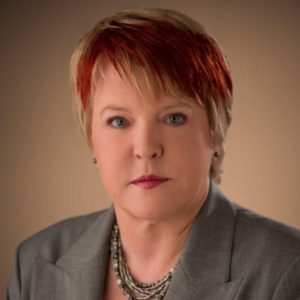 Sara Hanks, Founder and CEO of CrowdCheck, is an attorney with over 30 years of experience in the corporate and securities field. CrowdCheck provides due diligence, disclosure and compliance services for online capital formation. Its services help entrepreneurs and project sponsors through the disclosure and due diligence process, give investors the information they need to make an informed investment decision and avoid fraud and help intermediaries avoid liability.
 David N. Feldman concentrates his practice on corporate and securities law and mergers and acquisitions, as well as general representation of public and private companies, entrepreneurs, investors, and private equity and venture capital firms. Mr. Feldman also advises emerging growth companies with regard to alternatives to traditional financing through initial public offerings. He is also considered an authority on public offerings through the recently implemented SEC Regulation A+. Mr. Feldman also represents investors, social media sites, public and private issuers and applicants for grow and dispensary licenses in the emerging cannabis industry.
 Jason Paltrowitz is Executive Vice President and Global Head of Business Development at OTC Markets Group, where he is responsible for all international and domestic corporate services new business and relationship management. Prior to joining OTC Markets in October 2013, Mr. Paltrowitz was Managing Director and Segment Head at JP Morgan Chase and was responsible for the custody, clearing and collateral management business in the Corporate and Investment Bank division. Mr. Paltrowitz started his career at BNY Mellon serving in multiple senior management positions, most notably as Head of M&A for the Financial Markets and Treasury Services Sector and 11 years in the Depositary Receipt Division as the Head of the Global Capital Markets Group. Mr. Paltrowitz also served as a member of the Board of Directors at OTC Markets Group from 2008 – 2011.
 Patrick Tracey is Director of Business Development for Morrow Sodali. In this role, Pat brings expertise in a number of areas including Proxy Solicitation – Activism – Corporate Governance Advisory – IPO Prep – Demutualization (Insurance Companies, Community Banks and Credit Union) – Stock Surveillance for Public, Private and Mutual companies.
 Xiaocheh Zhang currently serves on the CfPA Board of Directors. He is also a co-founder of the Crowdfunding China Society (CFCS). As a crowdfunding thought leader, he has advised many organizations in applying alternative finance and result-based approach in transforming their business models. He has provided services to World Bank, United Nations, TUEV SUED, Virginia Tech, Peking University and some other organizations in the past 15 years. Xiaochen has rich experience in both public and private sector in America, Africa, Asia, Latin America and Europe to incubate and scale up innovative programs and projects at all levels. He is also a recognized speaker in climate finance, green innovation and crowdfunding. Here are a few examples:
 Rodney Sampson is an innovator, serial entrepreneur, angel investor, published author, and consecrated bishop. As an innovator and serial entrepreneur, Sampson co-founded Multicast Media Networks (Streamingfaith.com) in 2000 (acquired in 2010), a live and on-demand streaming platform that laid the foundation for companies like YouTube and Ustream. Not stopping there, Sampson co-founded Intellectual Currency (an integrated marketing, intellectual property, diversity & inclusion and business development advisory firm) in 2002, Intellect Inspire (a digital publishing imprint of Audible) in 2006, and Legacy Opportunity Fund in 2007 with investments in technology, consumer products, energy, cyber-security, publishing and the entrepreneurial ecosystem. He also serves on the advisory boards of Digit, a disruptive financial technology company, Mark Burnett Productions, Springboard Fund and multiple startup and early stage companies throughout the world.
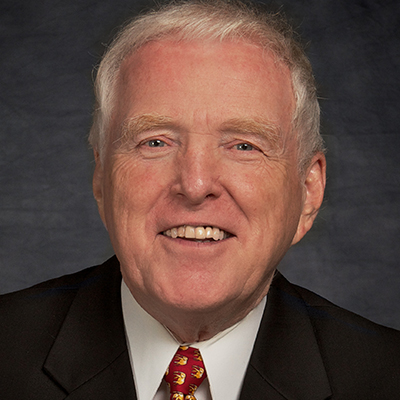 Thell Woods, a former interim president of the CfPA, founded and currently serves as chairman of Crowdfunding Services LLC. The company helps establish “Community Centric Crowdfunding” programs offering both non-profit and securities offerings. Thell serves specifically defined communities throughout Michigan developing the www.C3funding.com website as the base for these programs.
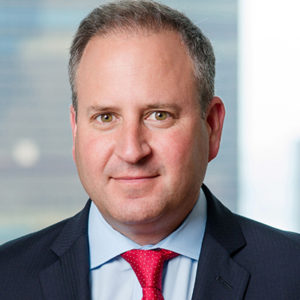 Brian Korn was elected to the Board of Directors (Legal P.O.V.) of the Crowdfunding Professional Association in January 2014. Brian is a corporate and securities attorney at the law firm Manatt, Phelps & Phillips, LLP, and has had multiple appearances on Fox Business Television, Bloomberg, CCTV America and National Public Radio as an expert on the JOBS Act, including its impact on crowdfunding, peer-to-peer lending, IPOs and market trading dynamics. He has been published or quoted in Forbes, CNBC, MSNBC, New York Law Journal, Law360, Philadelphia Inquirer, Pittsburgh Post-Gazette, The Financier Worldwide and The Review of Securities & Commodities Regulation.
 Thomas Lawson is vice president of private issuer services for VIA Folio, Folio’s private capital network. In his role at VIA Folio, he provides legal and regulatory guidance to business development and operations. As part of this work, he supports VIA Folio’s online transactions in unlisted securities. He joined Folio in 2015.
 AdaPia D’Errico is the Chief Marketing Officer at Patch of Land, where she heads up marketing, which includes strategy, brand, communications, partnerships and client services. Prior to joining Patch of Land, AdaPia ran a consulting company that developed growth strategies for major brands at Disney and Mattel, as well as technology and new media startups. AdaPia began her career at CIBC and subsequently spent 8 years in banking and investment management with a focus on customer relationship management, investor relations, and corporate communications. AdaPia is a published writer, blogger for The Huffington Post, and is a public presenter on topics including growth strategies, entrepreneurship, crowdfunding and brand development. AdaPia holds a B.B.A from the University of British Columbia and a B.A in International Business Economics from Hogeschool Zeeland, The Netherlands.
 Dara Albright is a recognized authority, thought provoker and frequent speaker on topics relating to market structure, private secondary transactions, next-gen IPOs, P2P, FinTech and crowdfinance. Albright has held a distinguished 23 year career in IPO execution, investment banking, corporate communications, financial marketing as well as institutional and retail sales.
 Jordan Fishfeld is the former CEO and co-founder of PeerRealty (sold), and current Chairman of the Board and co-founder of CFX Markets and OpenFinance Network, secondary market platforms for traditionally crowdfunded and digital assets, respectively. In this role, he focuses his time on strategic planning and general oversight in the new and growing digital marketplace. With over 8 years of compliance, legal, investing, and sales experience in regulated markets, Jordan understands the need for a single coherent voice in the crowdfunding and blockchain industries.
 Dr. Richard Swart is recognized as the global thought leader in the crowdfunding industry. Richard is a founding board member of the Crowdfunding Professional Association (CfPA), the Crowdfunding Intermediary Regulatory Advocates (CIFRA), and an early leader in the field. Richard co-organized the first major national conference on crowdfunding and coordinated several educational events on the JOBS Act throughout the United States for the White House.
 Scott McIntyre. 2024 marked Scott’s 9th term as Chairman of the CfPA’s Board of Directors, having served in leadership since formation in 2012, including four terms as President & Chair.
 Alon is the Managing Partner of Stacked Capital, an early-stage industry agnostic venture capital fund. Previously Alon was the co-founder, Chief Financial Officer, and Chief Technical Officer of crowdfunding platform RocketHub, acquired in 2015. Alon is a founding member of the Forbes Technology Council, and a Strategic Advisor to Zombie Soup (Artificial Intelligence, Virtual Reality, and games); he has twice testified in front of U.S. Congress on equity crowdfunding, co-authored three acclaimed whitepapers on the JOBS Act, and was selected to lead FINRA’s Capital Markets Series on crowdfunding. Alon oversaw RocketHub’s partnerships with the White House, U.S. Department of State, Fulbright Foundation, Cisco, Microsoft, Chrysler, and others. Alon has led large speaking engagements for organizations including American Express, TEDx, Campaign Summit, Re.Comm, and Make Innovation. Alon earned his M.Sc from Columbia University and was a fellow at the Earth Institute’s Advanced Consortium of Cooperation, Conflict, and Complexity; he specialized in genocide prevention and social network theory.
New Data Released by CfPA Shows Suprising Results
How much do you know about Crowdfunding? This was the context of a survey conducted by Crowdfunding Professional Association in conjunction with Crowdfund Capital Advisors. They asked 442 entrepreneurs, investors and intermediaries about their interest in crowdfunding, and also about themselves. What they discovered was encouraging as to the level of interest and how much capital they wish to invest, but there still is confusion about all the “CF” buzz words and how specifically equity-based crowdfunding platforms will differ from things like the popular platform Kickstarter.
Since the survey was hosted by Crowdfunding Professional Association, many of the responders (68 percent) were already very familiar with crowdfunding. However, when asked to rank their understanding on a scale of 1 to 10 as to the difference between what is allowed under current crowdfunding, and how it differs from what we will have in 2013 under the JOBS Act, 36.64 percent ranked themselves as a 5 or less, showing there is a real opportunity to educate the public. Fortunately, a majority of those sampled self-reported a high level of understanding of the implications of this new law, with a full 20.14 percent ranking themselves as having an understanding of 10.
“The general awareness of investment crowdfunding has increased substantially since April but there is still a meaningful opportunity to help entrepreneurs and investors better understand both the nuances of the JOBS Act and early-stage investing in general,” said Ryan Feit, CEO of SeedInvest, an equity-based platform and a leader within the Crowdfunding Professional Association. “Both of these objectives are critical in order to ensure that the investment crowdfunding industry takes off with the massive potential it possesses.”
Distinguishing between token crowdfunding and equity or debt-based crowdfund investing could pose a challenge for new investors, and it is important that people understand these differences if they are to meet their investment objectives. Token crowdfunding, the current model, only allows crowdfunding campaigns to reward donors with gifts, free
samples of their product , or other perks. In contrast, under the JOBS Act, the crowd will be able to be full-fledged investors with an equity stake in the company and a right to a share of the profits. A third popular kind of crowdfunding is debt-based, which allows investors to provide small loans to entrepreneurs similar to the kind of micro lending we have seen used for international development from people like Dr. Muhammad Yunus’ Grameen Bank.
One issue with debt-based crowdfunding is the loans are often unsecured by collateral, meaning investors take on the same level of risk as they would with equity-based crowdfunding, but the upside potential of a company taking off is removed as investors would only receive their loan repayment plus interest. However, statistics are showing low or no default rates, particularly on debt-based crowdfunding platforms like SoMoLend.
As for concerns within the crowdfunding space, respondents were generally enthusiastic and did not, on average, place one concern over another (on a scale of one to five). The respondents were more concerned about lack of business prowess (3.07), lack of entrepreneurial education (3.07) and fraudsters (3.05), than they were about the investor’s level of sophistication (2.98) or whether they will be overloaded with information (2.84). Interesting enough, ‘investors only’ ranked their concern over fraud a bit lower (3.02) than ‘entrepreneurs only’ (3.11) — surprising many who assumed investors would be markedly more concerned.
However, seeing fraud not at the top of the list is good news for the industry considering that crowdfunding in the UK has over the last two years produced a sterling record when it comes to fraud. Similarly, crowdfunding has been legal in Australia for seven years with no incidence of fraud. One widely reported incident of fraud involving a Massachusetts company was falsely associated with crowdfunding in the U.S. by the North American Securities Administrators Association, a major regulator of the traditional securities market — however they failed to point out that this particular incidence of fraud did not actually involve crowdfunding; it took place in 2010 long before the crowdfunding law was under consideration by Congress, and furthermore, all under the watchful eye of the old (and current) securities regime. The current securities laws, for several reasons, allow more secrecy in small investments (e.g.: they don’t require background checks) and make them harder to do (because of legal/compliance fees) and hence less common.
While we don’t like to harbor on fraud because the markets do operate at 99.9 percent efficiency, the truth is that there has been much more fraud in the traditional regulated market than there has been in crowdfunding. “We believe this is due to the community-based system,” says Sherwood Neiss, co-founder and principal at Crowdfund Capital Advisors. “Committing fraud within the crowdfund investing (CFI) framework is going to be hard to perpetrate. In CFI, all deals will have to flow through SEC-registered portals. These portals will be regulated and the offerings policed by the crowd. If there’s one thing we’ve seen come from social media, is it is nearly impossible to pull the wool over thousands of watchful eyes on the Internet.”
Since the data revealed 41 percent of responders had a desire to help companies get capital where they couldn’t before, 44 percent wanted to be part of something bigger than themselves, and 35 percent wanted to make a difference in the life of an entrepreneur, it seems investors are not afraid to roll up their sleeves and really look into what a company is doing to judge the viability of the investment themselves. The community aspect comes into play within the portals where current and prospective investors will be able to rate and comment on the activities of the various investments and hold management’s feet to the fire if things are being mismanaged. Such open dialog on a medium like the Internet, where thoughts and comments are recorded for history, leads to transparency and accountability.
In the seven years crowdfund investing has been legal in Australia and in the two years it has been legal in the UK, no cases of successful fraud have been discovered. In donation-based crowdfunding in the US, fraud has been caught rapidly, and always before funds are distributed, as social networks uncover the truth. Experience has already shown that potential sponsors are able to collectively crowdsource a startlingly effective due diligence machine far better than the eyes of a single Wall Street analyst. They are able to shed light on every aspect of the business. This is very different from the market of the early 2000′s when people bought and sold derivatives products blindly without looking at the underlying assets or what the original investment actually was. This type of community driven investing means people will have intimate knowledge of the activities of the few crowdfunded ventures in which they are able to participate before they reach a legal cap based on their income and net worth. This is a system by which friends, and friends-of-friends, get together to grow an idea they understand and personally support.
One major industry that will be big in crowdfunding is technology. A full 30 percent of the entrepreneur responders were in the technology sector with 10.3 percent in media and entertainment, 9.87 percent in finance, and 9.44 percent in consumer goods. 19.47 percent were in the catchall “Other” category, which included ideas such as Space and Robotics , Energy, Health, Beauty, Medical Devices and others. Crowdfunding seems to have natural allies among the tech sector innovators of Silicon Valley, as they are constantly starting new ventures and they understand the power of social media. “What they don’t have access to is the capital that only resides within 60 miles of Silicon Valley — which is where CFI steps in. It allows tech companies in Anytown, USA to raise capital for their ideas locally,” says Jason Best, co-founder and principal of Crowdfund Capital Advisors.
Where will the entrepreneurs gravitate to fund their ideas? The largest portion, 34.67 percent of respondents, said they would go to the most visible portal or platform to help raise the most capital, while another 34.34 percent were interested in industry-specific platforms. We surmise the interest in industry-specific platforms is based on a belief those platforms might better target more savvy investors interested in funding innovative technical niche ideas. The thinking driving that statistic might be that industry-specific ideas may not get traction from the average investor looking at returns alone on some other platform with more ‘generic’ offerings, despite the platform’s visibility. “
Since a large portion of the respondents were in technology and a sizable portion were interested in industry specific portals and platforms, it is likely that there will be room for several tech industry crowdfunding platforms to become successful in the new market.
Are these all zero revenue companies? Surprisingly, they are not. The respondents were generally small companies. Of the 122 that responded to the question about 2011 revenues, 81 percent reported under $100K. 15.7 percent reported having 2011 revenues between $500K and $1 Million. 1.65 percent had 2011 revenues between $1 million and $5 million, with another 1.65 percent reporting 2011 revenues of over $5 million. Don’t let their small sizes fool you, these entrepreneurs have big dreams! Although 36 percent of respondents were looking to raise capital for the first time, 35 percent have been part of a startup before, showing they have experience with startups.
While 15.88 percent of respondents had only an idea for a startup, 33.48 percent had a formal business plan, 27.04 percent had a product or prototype, and a full 23.61 percent were already operating and bringing in revenue. Those figures show the error in the notion that anyone and everyone with an idea will be throwing it up on CFI platforms, as the majority of respondents had much more than simply an idea.
36.64 percent of entrepreneurs were looking to raise under $100K in capital from portals to fund their venture. 35.34 percent wanted to raise between $100K to $500K. 16.81 percent wanted to raise between $500K and $1 million, while the remaining 11.21 percent were hoping to raise more than $1 million. With 88.79 percent of the respondents looking to raise amounts under the $1 million dollar threshold set out by the JOBS Act, it is clear that this new asset class will find an under-served market. It wouldn’t make sense for these companies to go though the red tape and regulatory burden of an IPO or formal Reg D to raise such a relatively small sum of capital. An exorbitant percentage of that raised capital would be taken up in attorney and investment bank fees under the traditional IPO process.
These companies aren’t looking for huge amounts of capital, but they do want to grow. 79.39 percent have three or fewer employees, and of that group 44.05 percent are companies made up of only one individual. They want money to expand, 41.24 percent of the companies want to take their employee count to five or more. “Jobs might be the biggest thing to come out of Crowdfund Investing,” says Neiss. “Capital to fund an idea is just one part of the equation. Having the capital you need to build a successful team to help you grow your business to the next level is another. Getting these entrepreneurs the capital they need will allow them to hire the Americans they want to launch great businesses.”
Small businesses find it difficult to get the eyes and ears of professional investors. With the current economy banks are failing to lend and refusing to take a chance on small businesses, to the point where many people have stopped trying. Out of 124 respondents 18.22 percent tried to get a loan from a traditional bank. Compare that figure with the 20.44 percent that approached Angel Investors, 13.78 percent that went to VC’s and 12 percent that went to private equity. To add further credibility as to why the community will be where these entrepreneurs find their funds, 35.56 percent went to friends and family. Clearly, people are eschewing the institutionalized paths to capital and opting for less formal sources of money that may be more interested in the upside potential of their business or idea rather than concerned about collateral.
From the survey we also learned quite a bit about potential Crowdfund Investors. Most respondents were not accredited investors. 71.43 percent self identified as non-accredited investors while 28.57 percent stated they were accredited. After the passage of Dodd-Frank in the US, the definition of an accredited investor changed to a person with a net worth over $1 million dollars, not including home equity, or a person making $200,000 per year for at least the past two years .This change in definition bumped many investors who were formerly accredited investors out of that class because many had a large portion of their assets tied up in home equity. 8.51 percent of responders had an annual income or net worth less then $40,000, 25.53. percent between $40,000 – $100,000, 42.55 percent between $100,000 and $500,000, 9.55 percent between $500,000 and $1M, and 13.83 percent had a net worth or annual income over $1 million.
According to the legislation, there are restrictions placed on how much each person can invest through crowdfunding, based on income or net worth.. If you make less than $40,000 per year you can only invest $2,000 in to all crowdfund projects. You can put up to 5 percent of your income (or net worth) if you make between $40,000 and $100,000. If you make or have over $100,000 in net worth you will be able to invest 10 percent of your income in crowdfund equities. It was important to look at these numbers from both an accredited and unaccredited point-of-view. Based on the chart below certain things became clear. 1) Accredited investors will be investing larger amounts in terms of dollars (34 percent said they would invest over $25,000), 2) the bulk of the contributions will come from unaccredited investors (71 percent), and 3) the median investments look to be in the $2,000 to $5,000 range.
If we drill down to the data some more and make some (overly) general assumptions that the middle of each of the ranges in the columns above is where the average investment will fall (and no investment will be greater than $100,000) then, on average, it would appear that unaccredited investors will deploy $4,347 per year and accredited investors will deploy $29,987per year. (If we toss out the top 10 percent and bottom 10 percent, the figures change to $26,188 for accredited and $3,635 for unaccredited).
You can see how quickly an entrepreneur who is one of the 72 percent hoping to raise under $500K in capital could meet his benchmark if only he can get the attention of enough of those investors looking to invest $29,987. It also is readily apparent that there is a sizeable group of people who fall outside the accredited parameters but are willing to invest in crowdfunding. The change in the legislation will allow this for the first time.
Since the folks who can invest more than $20,000 in crowdfunded ventures are likely to be accredited investors (if they have earned that $200K for two years or more) then we can see by the fact that we have some respondents wanting to invest $25K, $50K, and even more than $100K in crowdfunded equities, that this industry has tremendous potential.
At the end of the day, the fight to legalize crowdfunding was about democratizing access to capital so startups and small businesses could get back to innovating and creating jobs. Who was more excited? Entrepreneurs ranked it a 3.48 while investors put it at 3.37. Entrepreneurship was second and tied with investors at 3.25, and innovation was third with 2.98 for entrepreneurs vs. 2.87 for investors. What about the excitement over investment opportunities? Well, that’s where the investors came in above entrepreneurs, at 2.78 vs. 2.59. Seems like the investors really are interested!
One part of the survey results stood out from the rest with surprising results. When asked what the biggest driver is to investors in making their investment decisions, while 33 percent said the obvious answer was investment returns, 20 percent said their biggest driver was helping companies get capital where they couldn’t before. Another 20 percent said their main driver was being part of something greater than themselves. 17 percent said the ability to make a difference in the life of an entrepreneur was their biggest driver. Try getting that from the traditional economy.
“I think this survey shows how inspired people are by the unlimited possibilities that can happen with the crowdfunding bill. For once our entire society can play an active role in job creation and help level the playing field for access to capital for entrepreneurs everywhere.The Crowdfund Professional Association will continue to take a leading role in educating one and all, and help to create a strong and solid foundation for this new industry to thrive, ” stated Ruth Hedges, CEO of Funding RoadMap and Founding Governance board member of the CfPA.
Crowdfunding is the Real Deal – a Report from the Crowdfunding Bootcamp
The first annual Crowdfunding Bootcamp co-sponsored by the Crowdfunding Professional Association and Funding Roadmap was held this week in Henderson, NV. In attendance were over 300 investors, entrepreneurs and members of the crowdfunding industry from eight countries. The conference produced some unique insights, and from our vantage point we can already see trends developing in this nascent industry.
When President Obama signed the JOBS Act into law on April 5, 2012 we knew the battle had been won but not the war. The legislation provided the SEC with 270 days to issue the rules for crowdfund investing (aka equity or debt-based crowdfunding) to operate. Soon after, we learned that the industry would fall under the oversight of FINRA. In an attempt to provide a united industry voice for portals, investors, entrepreneurs, and third-party providers two industry associations were formed, The Crowdfunding Professional Association (CfPA), focused on investor education and representation, and Crowdfund Intermediary Regulator Advocates (CFIRA) began actively engaging with the SEC and FINRA to provide accurate and timely information from the industry during this rule-making phase of the process. This conference organized by Ruth Hedges of Crowdfunding Bootcamp was the first time members of all of the associations came together to share best practices, educate entrepreneurs and plan for the future.
Read More…
The Crowdfunding Bootcamp and CFPA Convention in Las Vegas
Las Vegas, Nevada (PRWEB) October 17, 2012 – The Crowdfunding Bootcamp and CFPA Convention in Las Vegas Nevada, October 9-11, was a pivotal event in the establishment of the Equity Crowdfunding industry. Hundreds of crowdfunding thought leaders, service providers, nascent funding portals, social media experts, accounting, legal and policy professionals, and individual entrepreneurs gathered to understand the challenges, the promise, and the nuts and bolts of the coming equity crowdfunding era, how it will be executed, and how it can be made to work for everyone.
Combined with the event was the first annual Crowdfunding Professionals Association CfPA Conference, a group of first movers in the industry. The Crowdfund Intermediary Regulatory Advocates was a co-sponsor of the event.
“Reflecting crowdfunding itself, the CFPA conference had an authentic DIY spirit and excitement that more ‘corporate’ conferences lack.” said Paul Spinrad, “I connected with people doing a diverse range of great things there, and gathered some information that will really help me. I look forward to an even bigger crowd at the 2013 event.”
CfPA board member Kim Wales said, “We all have a role to play! Whether you led from the front or led from the back; showed up to learn, teach, encourage or laugh – sell products or just to be seen – the conference hall was 250+ persons strong. All of our hands and minds came together in unity; forming the industry’s first Annual Crowdfunding Bootcamp and Crowdfunding Professional Association Conference in October 2012.”
Ruth Hedges, Crowdfundingroadmap.com bootcamp creator and organizer and board member of CfPA, hosted and moderated the event. “We are on the threshold of a new era in the financing and creation of new businesses. The JOBS Act crowdfunding provisions will allow for vastly expanded participation by all Americans who will be able to make small investments to participate in job creation and capital formation,” says Hedges, “the challenge now is two-fold: for the SEC to meet their responsibilities in finalizing the rules of the road by the end of the year, as stipulated in the bill, and the education and creation of a pipeline of entrepreneurs and as well as the education for a country of newly enfranchised small investors -that means you!- to be able to take advantage of this opportunity.”
Keynoter Peter Shankman, founder of Help A Reporter Out (HARO) and now small business evangelist for Vocus, was on hand to help frame conference business in terms of “understanding the rapidly changing technological, social and economic ecosystems that enable crowdfunding, along with examples of viral success stories and why they worked.” said Meghan Cole, VP of Operations for Laughlin Associates one of the event’s coordinators and sponsors.
Alix Shaer, fundraiser and well known for raising millions of dollars for the American Cancer Society, helped entrepreneurial attendees to think about how to leverage and recruit who they know and the importance of communicating one’s passion directly.
Wednesday’s panel featured a heady line-up including; Maurice Lopes of Early Shares, Candace Klein of Bad Girl Ventures and SoMoLend, Scott Purcell of the crowdfunding platform Arctic Island, Joy Schoffler of Leverage PR, D.J. Paul of Crowdfunder, Rodney Sampson of Legacy Opportunity Fund and Dara Albright of NowStreetMedia. “If one could choose one element of the event that people would have wanted a lot more of, it was this incisively intelligent and practical-minded panel,” said conference staffer Joe Phelan.
Other amazing speakers included Douglas Ellenoff, of Ellenoff Grossman & Schole LLP, who has consulted with the SEC on crowdfunding rules and whose firm, along with Sara Hanks founder of Crowdcheck, has played leadership roles in communication with the SEC to help establish those rules; bringing further credibility, Gary Milkwick of 1800Accountant- a firm specialized in small business; Michael Fultz of Fund All Be All, a full spectrum crowdfunding service provider; Bruce Johnston and Zachary Hedges of CaptureTrackConvert, a customer acquisition optimizing platform, and; Karl Burl of Navicate, a service to streamline the valuation process and Arron Young CEO of Laughlin Associates a first mover in providing Incorpoation and corporate veil protection to the crowdfunding industry.
The event featured the first Funding Portal Pavillion TM, with booths featuring 30+ companies who provide services and support to entrepreneurs. Many new portal companies were able to interact with their future customers and each other. “The CFPA conference was an incredible event, probably the largest CrowdFunding event to date in number of attendees. The vibe and deals were so positive that even direct competitors became great new friends.” said Maurice Lopes CEO of EarlyShares.com “When the right people get together to support a new industry great things can really happen!”
Toward the end of the last day, Sherwood Neiss, a founding member of the Crowdfund Professional Association, who also helped push the Jumpstart Our Business Startups Act in Congress, stood up and talked about the issues of potential fraud, transparency and accountability, and noted that with equity crowdfunding, as with the current gift-based crowdfunding, the safety is in that one has to build support from your friends and family who expand out to their friends and family; without the trust of the people who know you, there is little chance of your campaign going viral and getting funded. Support doesn’t come from an impulse. The internet has a memory. Neiss explained. “Con-artists will for the most part be identified and the disclosure and transparency as stipulated in the bill and registration process will keep fraudsters from even starting.”
Ms. Hedges emphasized the need for getting entrepreneurs educated and prepared in the crowdfunding process: “To feed the demand next year from these new funding portals and the millions of new investors who will be looking for quality deal flow, we need to start now and build a pipeline of one million crowdfund compliant small businesses who will be ready to launch an equity crowdfunding campaign once its legal to do so. We need to ramp this up now in order to provide a continuous flow to create the new businesses and jobs that will power our economy forward.”
On the last day, Jed Cohen, CEO of Rocket Hu b gave the closing keynote, brilliantly explaining the logical dynamics of crowdfunding with diagrams that in one case resembled the clusters of star systems he studied as an astrophysics student. Rocket Hub is one of the existing crowdfunding sites that sees equity crowdfunding in its own future.
Alternative investment: Crowdfunding
Innovation was urgently needed to provide small and emerging businesses with alternative ways to raise sums of funds outside of the traditional financing methods. In December 2011, British MP Vince Cable launched a taskforce to open fresh funding channels for small UK business.
Shortly thereafter, on 5 April, 2012, the US government, with the involvement of only a handful of entrepreneurs, enacted the Jumpstart Our Business Startup ACT, Title III (JOBS Act). “This legislation marks an important moment in US history,” remarks Sherwood Neiss, one of a handful of private sector advocates that worked with Congress to draft the legislation, “the JOBS Act was truly a bill written by seasoned entrepreneurs for Main Street entrepreneurs.”
A Congressional vote with 390 supporters spurred this historic moment, placing particular emphasis on the new opportunity for securities-based crowd funding, which allows small and emerging businesses to raise up to US$1 million in a 12-month calendar year via the internet using an Intermediary (portal or broker).
Read More…
Crowdfunding Professional Association Partners with Invest Crowdfund Canada
Crowdfunding provides Canadian entrepreneurs with new alternatives for financing. Equity or Debt financing in Canada via crowdfunding portals is currently not accessible to Canadians.
With the results from the World Economic Forum Report, Canada’s recent drop of two innovation rankings to 14th place further demonstrates Canada is not taking full advantage of its strong economic fundamentals.
“We are integrating our ICC operation with CfPA to further strengthen our national lobbying efforts coast to coast. This also allows us to bring a National Crowdfunding Association to Canadians, and help us develop skills, competencies, best practices, and grow a new innovation cluster for Canadians. Membership for all Canadians to CfPA is free at this time, says Dr. Cindy Gordon, National Chair, ICC, Co-Founder, SalesChoice, Board Director, CATA.
Read more…
Silicon Valley Debates the Do’s and Don’ts of Equity Crowdfunding
But what will you do when they offer you shares in their startup company?
That expansion of social media is on its way, as soon as securities regulators finish the rules for a new way to float private stock issues—equity crowdfunding.
Congress, by passing the JOBS (Jumpstart Our Business Startups) Act in March, created a number of alternatives to the traditional IPO, or initial public offering, for company financing. One of them will allow entrepreneurs to raise up to a million dollars a year by selling shares in their startups to hundreds or thousands of people they’ll reach through websites and social media networks.
Read more…
Survey Shows Many Small Business Are Not Aware Of Crowdfunding
At a time when small businesses cannot find capital, it’s hard to believe that small businesses do not know where to look to raise funds. Credit agency Experian discovered that more than two-third of small businesses surveyed by Experian are unaware of crowdfunding.
When questioned about the first thing they do when thinking about additional financing, the respondents disclosed:
The findings also reveal that 60 per cent of respondents had sought some form of extra funding in the last 12 months and the need to alleviate short-term cash flow problems was by far the biggest reason for applying for extra cash (58 per cent). This outstripped activities for growth, such as expanding their product portfolio (20 per cent) or hiring more staff (12 per cent).
Experian also found that only one in four (27 per cent) SMEs definitely planned to apply for some form of extra funding in the coming year.
Image (c) by Crestock
An Interview with David Drake on the Future of Crowdfunding
Crowdfund Insider: You’ve been involved in crowdfunding for quite a while now and were instrumental in the creation of some extremely influential groups. What brought you in?
David Drake: LDJ Capital invested in a conference series called The Soho Loft early summer 2011 (from the name of the Loft I had entertained to clients and customers in Soho for the first 10 years of the 21st century). We were hoping to invite our family office clients and limited partners. The Private Company Marketplace focus with Facebook transactions, broker dealers and institutional investors did not match well with the focused events family offices and LPs sought. We quickly adjusted and before I knew it 6 sub-congressional witnesses and today friends spoke 1-3 times per month for us on the 6 bills underlying the JOBS Act. Suddenly I am lobbying congress and the bills pass. The entrepreneurial spirit came together as I created the first crowd funding panels during our events and I got to meet all the crowd funding leaders nationwide. There was no other conference bringing together all the crowd fund platforms monthly in 2011. We were it globally.
Read more…
SEC Offers Forum on Small Business Capital Formation
Washington, D.C., Sept. 20, 2012 – The Securities and Exchange Commission will hold its annual SEC Government-Business Forum on Small Business Capital Formation on November 15 at its Washington, D.C. headquarters.
This year’s forum will begin with panel discussions on the implementation of the recently enacted Jumpstart Our Business Startups Act, or JOBS Act, and on small business capital formation issues not addressed by the JOBS Act. During the afternoon, participants will work in groups to formulate specific policy recommendations.
The forum begins at 9 a.m. ET with the panel discussions, which will be webcast live on the SEC’s website. The afternoon breakout group sessions will be open to the public and accessible by teleconference, but will not be webcast. Anyone wishing to participate in a breakout group, either in person or by teleconference, must register online by November 12.
The names of panel participants and the full agenda for the forum will be announced at a later date and posted on the SEC’s website. Members of the public are invited to make suggestions for recommendations or topics to be discussed at the forum. These suggestions, and any questions about the forum, should be e-mailed to the SEC’s Office of Small Business Policy at SmallBusiness@sec.gov. For more information, call (202) 551-3460.
Crowdfunding Stifled at Home, Expands Overseas
Crowdfunding, which pools small donations from large amounts of investors, continues to make large, sweeping global inroads. From a donation site supporting the arts to a value-for-value trade to a platform that investors use to find a return on their investment, crowdfunding is becoming a highly sophisticated and radical game-changer. But as it moves towards a business model that attracts more traditional investors, risk also increases.
In the United States, however, there has been some foot dragging when it comes to the specific rules governing certain types of crowdfunding. The Jumpstart Our Business Startups Act of 2012 gives the Securities and Exchange Comission until next year at the earliest (does it really need to take that long?) to establish those rules. Rather than speed up this ridiculous bureaucratic timetable during the most trying economic times since the Great Depression, the SEC has muddied the process by disputing who qualifies as an “accredited investor.”
At the end of August, the North American Securities Administrators Association identified “Crowdfunding and Internet Offers” as a top emerging investor threat.