

CfPA Regulatory & Legislative Policy Platform
CfPA Board of Directors 2025 Policy Platform
Full formatted document is here: https://cfpa.org/wp-content/uploads/2025/01/CfPA-Policy-Platform-Jan-2025.pdf
CfPA Policy Positions
As Approved by the CfPA Board of Directors
Adopted May 10, 2024, amended September 13, 2024 and January 10, 2025
CfPA Policy Positions
As Approved by the CfPA Board of Directors
Adopted May 10, 2024, amended September 13, 2024, January 10, 2025, and March 14, 2025
1. Exemptive Relief for Small Offerings
Reg CF should be an accessible and useful tool for diverse businesses from small
mom-and-pop shops to high-growth tech companies. The current rules make it
financially infeasible to conduct small raises because the fixed costs are high and
experts are needed to ensure compliance. Therefore, we support the consideration of
relief from some of the more onerous requirements for small offerings.
2. Reform of Requirements for Financial Reporting
The requirement to provide an independent review or audit is nonsensical for a
business with no operating history – we support tailoring the financial reporting
requirements so that reviews and audits are only required for businesses with at least
six months of operating history. Similarly, the requirement of GAAP financials should be
waived for early-stage and smaller businesses (including crowdfunding vehicles they
use for their raises). This applies to post-raise reporting as well. For those issuers that
choose to provide a higher level of reporting, this can be prominently disclosed so that
potential investors know that they are receiving a more fully vetted financial report. Note
that the Small Business Administration does not require GAAP-compliant financials for
its borrowers.
3. Consistency and Transparency in Oversight of Portals
Consistent regulatory compliance is necessary to ensure the viability of the industry. All
portals should be subject to the same level of scrutiny and enforcement. Rule violations
should be addressed quickly to maintain the public’s confidence in the tool. To prevent
the appearance of arbitrary inconsistency, regulatory decisions and guidance provided
by both FINRA and the SEC should be made available to the public.
Portals report that FINRA is not transparent about the requirements it imposes for new
applications or for audits, creating a great deal of uncertainty and a long drawn-out
approval process. FINRA often imposes multiple extensions on the approval process as
seemingly arbitrary requirements are imposed.
We request that FINRA be required to (1) publish guidance regarding its requirements
for new portals, (2) update the FP-NMA to reflect what is actually required to be
considered complete, (3) provide guidance for ongoing compliance of existing portals,
and (4) treat each portal consistently in regards to those requirements.
4. Simplification of Rules
We support streamlining overly complicated requirements such as the per investor
annual investment limit and the advertising rules, which are extremely confusing and
almost impossible to comply with. We support a simplification of these rules such as
allowing issuers to include terms in all public communications (irrespective of when
those communications are made in the offering process) and having per investor limits
mirror the simpler requirement under Reg A.
5. Disclosures to Investors
It is important that investors understand what they are getting when they invest and the
potential tax implications of those investments. The SEC should provide portals with
standard disclosures regarding the following:
i. details of what an investor is receiving in exchange for their investment
ii. whether the investor is investing directly in the issuer or a crowdfunding
vehicle
iii. a warning about potential tax issues in the form of a general overview
and the recommendation to consult one’s tax advisor
iv. if the investor is investing in a crowdfunding vehicle, what this means in
terms of fees, costs, tax treatment, governance rights, ongoing
record-keeping requirements, etc.
v. the importance of reviewing the Form C and a prominent link to view the
Form C with all Form C pdfs clearly labeled.
6. Searchable PDFs on EDGAR
In the interest of enhancing transparency and efficacy in investor due diligence, we
propose a crucial amendment to the current filing requirements within the SEC EDGAR
system. Specifically, we recommend the mandatory submission of searchable PDF
documents, rather than the current practice of uploading flattened, non-searchable files.
The inability to conduct keyword searches within lengthy offering circulars and other
crucial documents not only undermines the efficiency of the investment decision
process but also potentially obscures critical information necessary for a thorough
evaluation. Key terms or other indicators of investment risk and opportunity must be
readily accessible to investors. This enhancement in document accessibility will
significantly improve investors’ ability to conduct comprehensive and efficient analyses,
ensuring they are better informed and more equipped to make judicious investment
decisions.
7. Disclosures to Issuers
Issuers must receive clear and complete disclosures regarding portal fees, privacy
policies, and the use of crowdfunding vehicles. Portals should be required to provide
complete, prominent, plain English disclosures regarding all of the following issues:
i. if the portal requires the use of a crowdfunding vehicle and the
implications of the use of a crowdfunding vehicle
ii. all fees charged by the portal, including fees charged by third-party
service providers required by the portal
iii. a reminder that the issuer is responsible for the content of the Form C and
the implications of allowing the portal to file on its behalf, including the
risks of filing an incomplete or noncompliant document with the SEC
iv. the issuer’s annual reporting requirements, including the requirement to
maintain GAAP-compliant financials and additional reporting requirements
when a crowdfunding vehicle is used.
8. Crowdfunding Vehicles and Avoiding Registration
The CfPA supports the following changes:
a. The rules governing crowdfunding vehicles are challenging to apply in practice –
the concept of a “one-to-one relationship” is not easily interpreted in many
contexts. There is a need for greater clarity and examples of how the SPV should
be structured when the crowdfunding issuer securities are SAFEs, convertible
notes, etc. (as opposed to shares or LLC equity interests).
b. The use of a crowdfunding vehicle can add a great deal of expense and
complexity to an offering because the crowdfunding vehicle itself is subject to all
of the same compliance requirements as the underlying issuer. To reduce the
need to use crowdfunding vehicles, we support removing the $25 million asset
cap for companies wishing to avoid registration under Section 12(g).
c. There is a lack of consistency regarding the use of Series LLCs as crowdfunding
vehicles – while one portal uses a Series LLC, other portals have been told by
FINRA that Series LLCs may not be used. FINRA should provide unequivocal
guidance on this issue.
d. We also request clarification regarding what it means to be “current in ongoing
annual reports” with respect to the requirements for avoiding registration under
Section 12(g). We request confirmation that as long as the issuer has filed all
required reports, it will be considered “current in ongoing annual reports.”
9. Crowdfunding by Portals
We support allowing portals to raise funding on their own platforms as long as the
relationship is fully disclosed and the number of raises is limited (e.g. one per year).
Requiring portals to raise on competitor’s platforms creates an unfair limitation on
portals’ ability to raise under Reg CF.
10. Allowing Investment Funds to Raise under Reg CF
The current statute provides that Title III does not apply to any issuer that “is an
investment company, as defined in section 80a–3 of this title, or is excluded from the
definition of investment company by section 80a–3(b) of this title or section 80a–3(c) of
this title.”
We propose striking this provision so that investment companies and companies
excluded from the definition of an investment company under Sections 3(b) and (c) of
the Investment Company Act may raise funds under Regulation Crowdfunding.
We also propose the addition of a new exemption under Section 3(c) of the Investment
Company Act for small funds (e.g. up to $50 million) with no limitations on number of
investors or method of solicitation.
11. Tax and Accounting Treatment of Securities
Many of the securities offered by small businesses face ambiguity regarding their tax
treatment. We request assistance with securing guidance from the IRS and FASB on
instruments like revenue-based debt and SAFEs.
12. Unsecured RBF Debt
We request that the SBA treat unsecured revenue-based debt instruments as equity
when determining eligibility for a loan.
13. Tax Credit for Crowd Investors
We support the implementation of an annual tax credit of up to $1,000 for any individual
(up to $2,000 for married couples filing jointly) with income not exceeding $539,000 (or
$647,850 for married couples filing jointly), or whatever corresponding income levels
may be in effect and applicable to the top tax bracket, and that has made an investment
into one or more issuers raising money through a Reg CF offering, such that the total
amount invested into issuers for the preceding year totals two times the amount of the
tax credit.
14. Annual Report Submission
We request that the SEC provide a more user- friendly tool (outside of EDGAR which is
extremely confusing for inexperienced users) for submitting annual reports so that
issuers may avoid vendor fees for filing their reports.
15. When a Reg CF Issuer Goes Public
Investors that have invested in an issuer via Reg CF have difficulty getting their
securities into a brokerage account when the issuer conducts an IPO. This sometimes
results in the Reg CF investors being unable to sell when the shares are at their highest
price. We request industry guidance to prevent this unfair treatment of Reg CF
investors.
16. Annual Raise Limits
a. We support an increase on the cap for issuers raising funds for the Reg CF
annual limit from $5M to $20M and the Reg A (Tier 2) annual limit from $75M to
$150M.
b. We support an amendment to Title III of the JOBS Act that removes limits on the
SEC’s authority to increase the caps on the amounts that can be raised under
Regulation Crowdfunding.
17. Privacy and Safeguarding of Nonpublic Personal Information
Crowdfunding intermediaries should be required to provide notices to customers about
their privacy policies and practices, describe conditions under which they may disclose
nonpublic personal information to nonaffiliated third parties, and provide customers with
an opportunity to opt out of such disclosures. Intermediaries should also implement an
information security program that includes administrative, technical, and physical
safeguards designed to protect the security, confidentiality, and integrity of nonpublic
personal information.
18. Consistency of Terminology
The term “equity crowdfunding” is used frequently by industry participants. This term is
misleading because it implies that what investors are getting is an equity investment
which is often not the case. We support the requirement to use the term “Regulated
Investment Crowdfunding” consistently to prevent confusion and request the SEC
formalize this requirement, thereby reinforcing the integrity of the investment landscape.
Crowdfunding Professional Association – www.CfPA.org
contact@CfPA.org 712 H Street NE Suite 2127, Washington, DC 20002



 Brian is the Founder of Crowdwise, LLC, and is an angel investor in 80+ private startups through equity crowdfunding.
 Jenny Kassan has almost three decades of experience as an attorney and advisor for mission-driven enterprises. She has helped her clients raise millions of dollars from values-aligned investors and raised over $3 million for her own businesses.
 Over 35 years of experience in Information Technology with the majority of time being spent in the Financial Services industry. Possesses detailed knowledge of all aspects of the online capital formation/crowdfunding, international brokerage, hedge fund and asset management businesses. Able to recruit and motivate strong teams capable of solving mission critical business problems.
 Devin is a journalist, author and educator. He calls himself a champion of social good. As a new-media journalist and founder of the Your Mark on the World Center, Devin has established himself as a champion of social good. As a Forbes contributor, with over 400 bylines and over
 Vincent Molinari is the CEO of Templum Markets, (FINRA Registered Broker Dealer and ATS) and Co-Founder of it’s parent company, Templum, Inc. He is also a Co-Founder and Co-Chair of the Blockchain Commission for Sustainable Development and is a Co-Founder and Co-Chair of Blockchain for Impact.
 Blaine McLaughlin is the Chief Product Officer of VIA Folio, an innovative IPO, private and alternative investment platform that makes it easy for online platforms, issuers, investors, brokers and advisors to engage with IPOs, private and alternative debt and equity offerings. Part of Folio Investments, Inc., VIA Folio supports issuance, custody, servicing and secondary transactions in public and private equity and debt investments, and other listed and unlisted securities. McLaughlin joined the company in 2007, and has led retail customer acquisition and management, partnerships, portfolio acquisition, introducing broker services, and other business development activities.
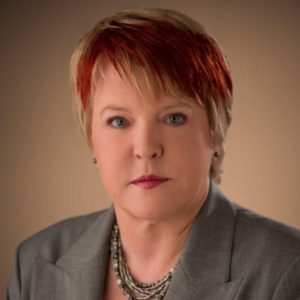 Sara Hanks, Founder and CEO of CrowdCheck, is an attorney with over 30 years of experience in the corporate and securities field. CrowdCheck provides due diligence, disclosure and compliance services for online capital formation. Its services help entrepreneurs and project sponsors through the disclosure and due diligence process, give investors the information they need to make an informed investment decision and avoid fraud and help intermediaries avoid liability.
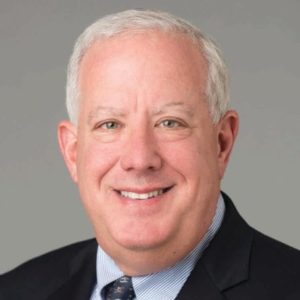 David N. Feldman concentrates his practice on corporate and securities law and mergers and acquisitions, as well as general representation of public and private companies, entrepreneurs, investors, and private equity and venture capital firms. Mr. Feldman also advises emerging growth companies with regard to alternatives to traditional financing through initial public offerings. He is also considered an authority on public offerings through the recently implemented SEC Regulation A+. Mr. Feldman also represents investors, social media sites, public and private issuers and applicants for grow and dispensary licenses in the emerging cannabis industry.
 Jason Paltrowitz is Executive Vice President and Global Head of Business Development at OTC Markets Group, where he is responsible for all international and domestic corporate services new business and relationship management. Prior to joining OTC Markets in October 2013, Mr. Paltrowitz was Managing Director and Segment Head at JP Morgan Chase and was responsible for the custody, clearing and collateral management business in the Corporate and Investment Bank division. Mr. Paltrowitz started his career at BNY Mellon serving in multiple senior management positions, most notably as Head of M&A for the Financial Markets and Treasury Services Sector and 11 years in the Depositary Receipt Division as the Head of the Global Capital Markets Group. Mr. Paltrowitz also served as a member of the Board of Directors at OTC Markets Group from 2008 – 2011.
 Patrick Tracey is Director of Business Development for Morrow Sodali. In this role, Pat brings expertise in a number of areas including Proxy Solicitation – Activism – Corporate Governance Advisory – IPO Prep – Demutualization (Insurance Companies, Community Banks and Credit Union) – Stock Surveillance for Public, Private and Mutual companies.
 Xiaocheh Zhang currently serves on the CfPA Board of Directors. He is also a co-founder of the Crowdfunding China Society (CFCS). As a crowdfunding thought leader, he has advised many organizations in applying alternative finance and result-based approach in transforming their business models. He has provided services to World Bank, United Nations, TUEV SUED, Virginia Tech, Peking University and some other organizations in the past 15 years. Xiaochen has rich experience in both public and private sector in America, Africa, Asia, Latin America and Europe to incubate and scale up innovative programs and projects at all levels. He is also a recognized speaker in climate finance, green innovation and crowdfunding. Here are a few examples:
 Rodney Sampson is an innovator, serial entrepreneur, angel investor, published author, and consecrated bishop. As an innovator and serial entrepreneur, Sampson co-founded Multicast Media Networks (Streamingfaith.com) in 2000 (acquired in 2010), a live and on-demand streaming platform that laid the foundation for companies like YouTube and Ustream. Not stopping there, Sampson co-founded Intellectual Currency (an integrated marketing, intellectual property, diversity & inclusion and business development advisory firm) in 2002, Intellect Inspire (a digital publishing imprint of Audible) in 2006, and Legacy Opportunity Fund in 2007 with investments in technology, consumer products, energy, cyber-security, publishing and the entrepreneurial ecosystem. He also serves on the advisory boards of Digit, a disruptive financial technology company, Mark Burnett Productions, Springboard Fund and multiple startup and early stage companies throughout the world.
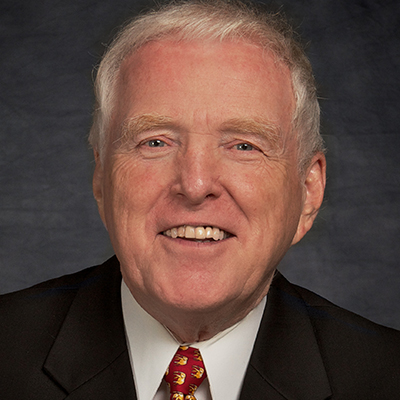 Thell Woods, a former interim president of the CfPA, founded and currently serves as chairman of Crowdfunding Services LLC. The company helps establish “Community Centric Crowdfunding” programs offering both non-profit and securities offerings. Thell serves specifically defined communities throughout Michigan developing the www.C3funding.com website as the base for these programs.
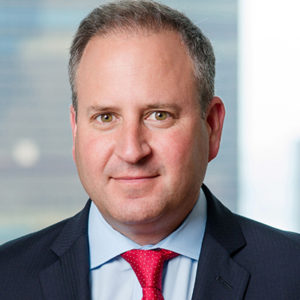 Brian Korn was elected to the Board of Directors (Legal P.O.V.) of the Crowdfunding Professional Association in January 2014. Brian is a corporate and securities attorney at the law firm Manatt, Phelps & Phillips, LLP, and has had multiple appearances on Fox Business Television, Bloomberg, CCTV America and National Public Radio as an expert on the JOBS Act, including its impact on crowdfunding, peer-to-peer lending, IPOs and market trading dynamics. He has been published or quoted in Forbes, CNBC, MSNBC, New York Law Journal, Law360, Philadelphia Inquirer, Pittsburgh Post-Gazette, The Financier Worldwide and The Review of Securities & Commodities Regulation.
 Thomas Lawson is vice president of private issuer services for VIA Folio, Folio’s private capital network. In his role at VIA Folio, he provides legal and regulatory guidance to business development and operations. As part of this work, he supports VIA Folio’s online transactions in unlisted securities. He joined Folio in 2015.
 AdaPia D’Errico is the Chief Marketing Officer at Patch of Land, where she heads up marketing, which includes strategy, brand, communications, partnerships and client services. Prior to joining Patch of Land, AdaPia ran a consulting company that developed growth strategies for major brands at Disney and Mattel, as well as technology and new media startups. AdaPia began her career at CIBC and subsequently spent 8 years in banking and investment management with a focus on customer relationship management, investor relations, and corporate communications. AdaPia is a published writer, blogger for The Huffington Post, and is a public presenter on topics including growth strategies, entrepreneurship, crowdfunding and brand development. AdaPia holds a B.B.A from the University of British Columbia and a B.A in International Business Economics from Hogeschool Zeeland, The Netherlands.
 Dara Albright is a recognized authority, thought provoker and frequent speaker on topics relating to market structure, private secondary transactions, next-gen IPOs, P2P, FinTech and crowdfinance. Albright has held a distinguished 23 year career in IPO execution, investment banking, corporate communications, financial marketing as well as institutional and retail sales.
 Jordan Fishfeld is the former CEO and co-founder of PeerRealty (sold), and current Chairman of the Board and co-founder of CFX Markets and OpenFinance Network, secondary market platforms for traditionally crowdfunded and digital assets, respectively. In this role, he focuses his time on strategic planning and general oversight in the new and growing digital marketplace. With over 8 years of compliance, legal, investing, and sales experience in regulated markets, Jordan understands the need for a single coherent voice in the crowdfunding and blockchain industries.
 Dr. Richard Swart is recognized as the global thought leader in the crowdfunding industry. Richard is a founding board member of the Crowdfunding Professional Association (CfPA), the Crowdfunding Intermediary Regulatory Advocates (CIFRA), and an early leader in the field. Richard co-organized the first major national conference on crowdfunding and coordinated several educational events on the JOBS Act throughout the United States for the White House.
 Scott McIntyre. 2024 marked Scott’s 9th term as Chairman of the CfPA’s Board of Directors, having served in leadership since formation in 2012, including four terms as President & Chair.
 Alon is the Managing Partner of Stacked Capital, an early-stage industry agnostic venture capital fund. Previously Alon was the co-founder, Chief Financial Officer, and Chief Technical Officer of crowdfunding platform RocketHub, acquired in 2015. Alon is a founding member of the Forbes Technology Council, and a Strategic Advisor to Zombie Soup (Artificial Intelligence, Virtual Reality, and games); he has twice testified in front of U.S. Congress on equity crowdfunding, co-authored three acclaimed whitepapers on the JOBS Act, and was selected to lead FINRA’s Capital Markets Series on crowdfunding. Alon oversaw RocketHub’s partnerships with the White House, U.S. Department of State, Fulbright Foundation, Cisco, Microsoft, Chrysler, and others. Alon has led large speaking engagements for organizations including American Express, TEDx, Campaign Summit, Re.Comm, and Make Innovation. Alon earned his M.Sc from Columbia University and was a fellow at the Earth Institute’s Advanced Consortium of Cooperation, Conflict, and Complexity; he specialized in genocide prevention and social network theory.